the boundlessness of british cloth: in conversation with ennis finnerty mackay
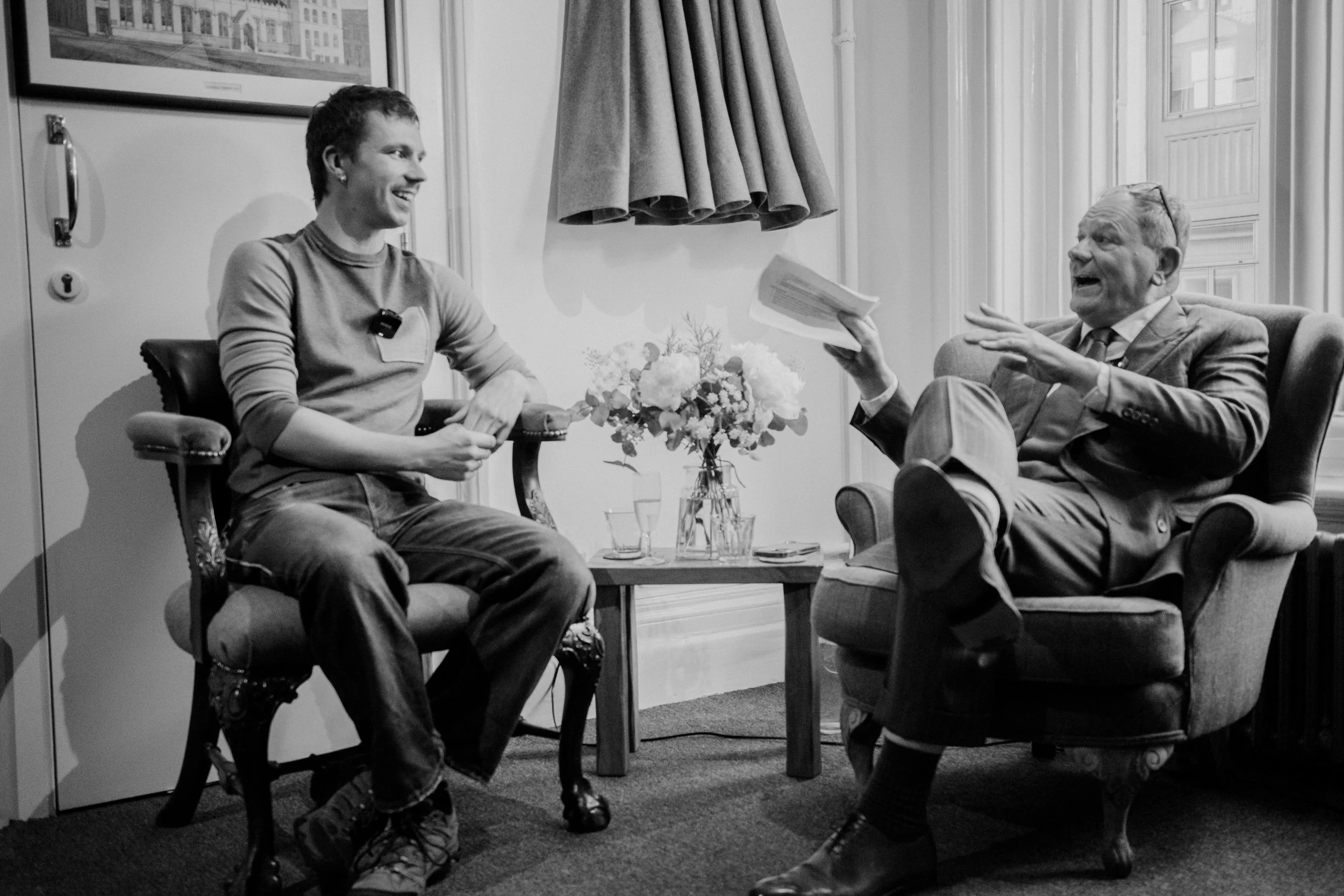
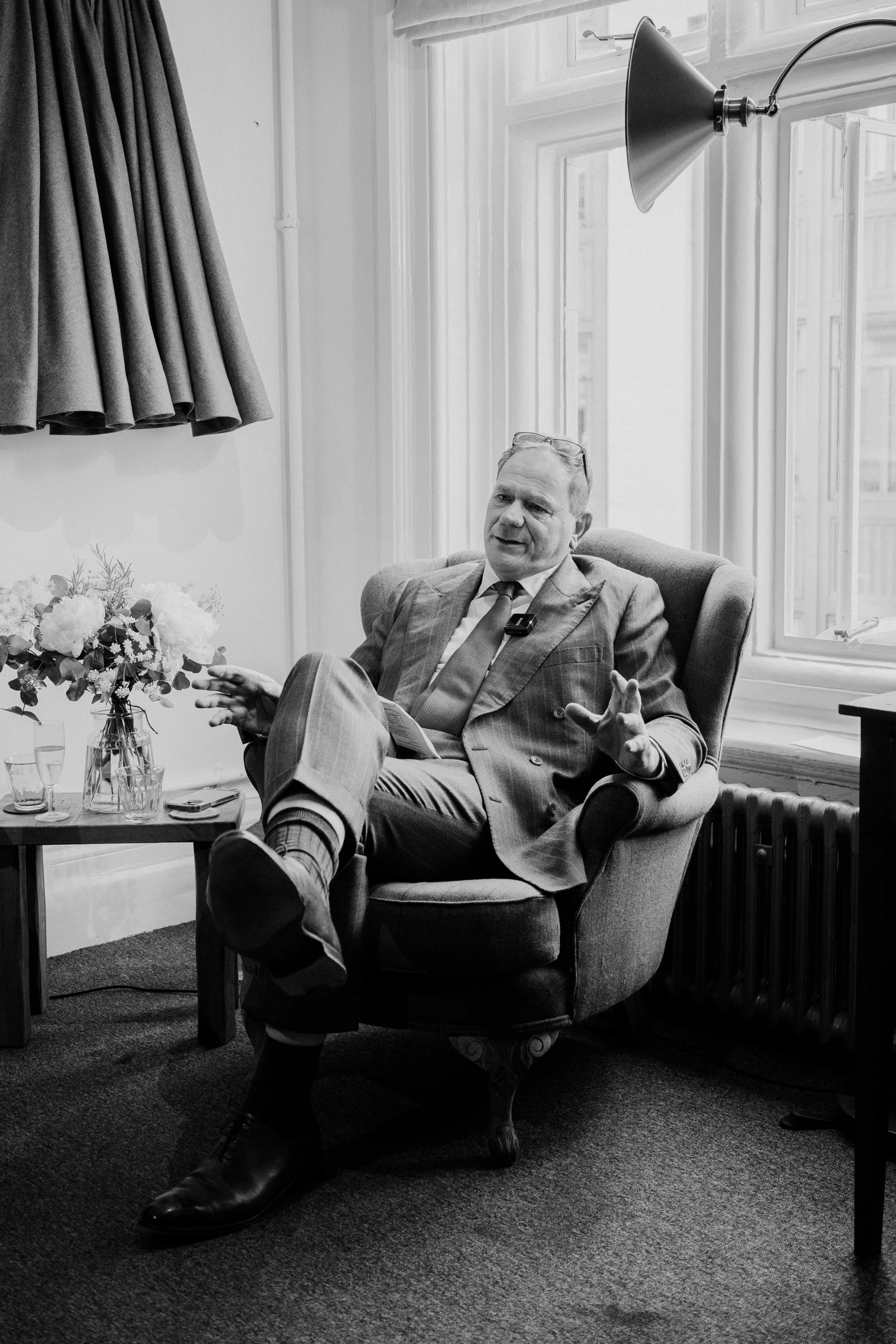
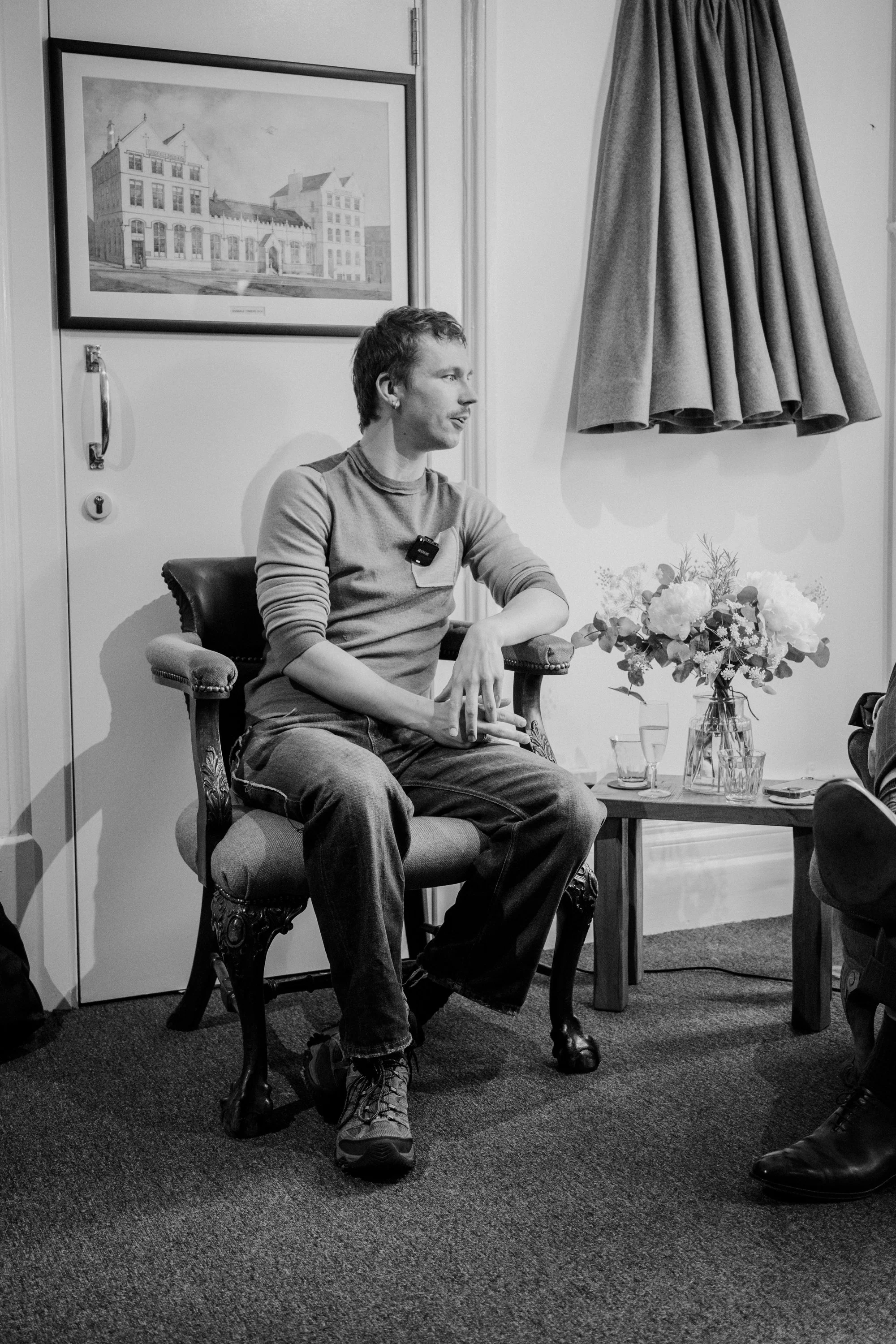
Ennis and Rob in conversation.
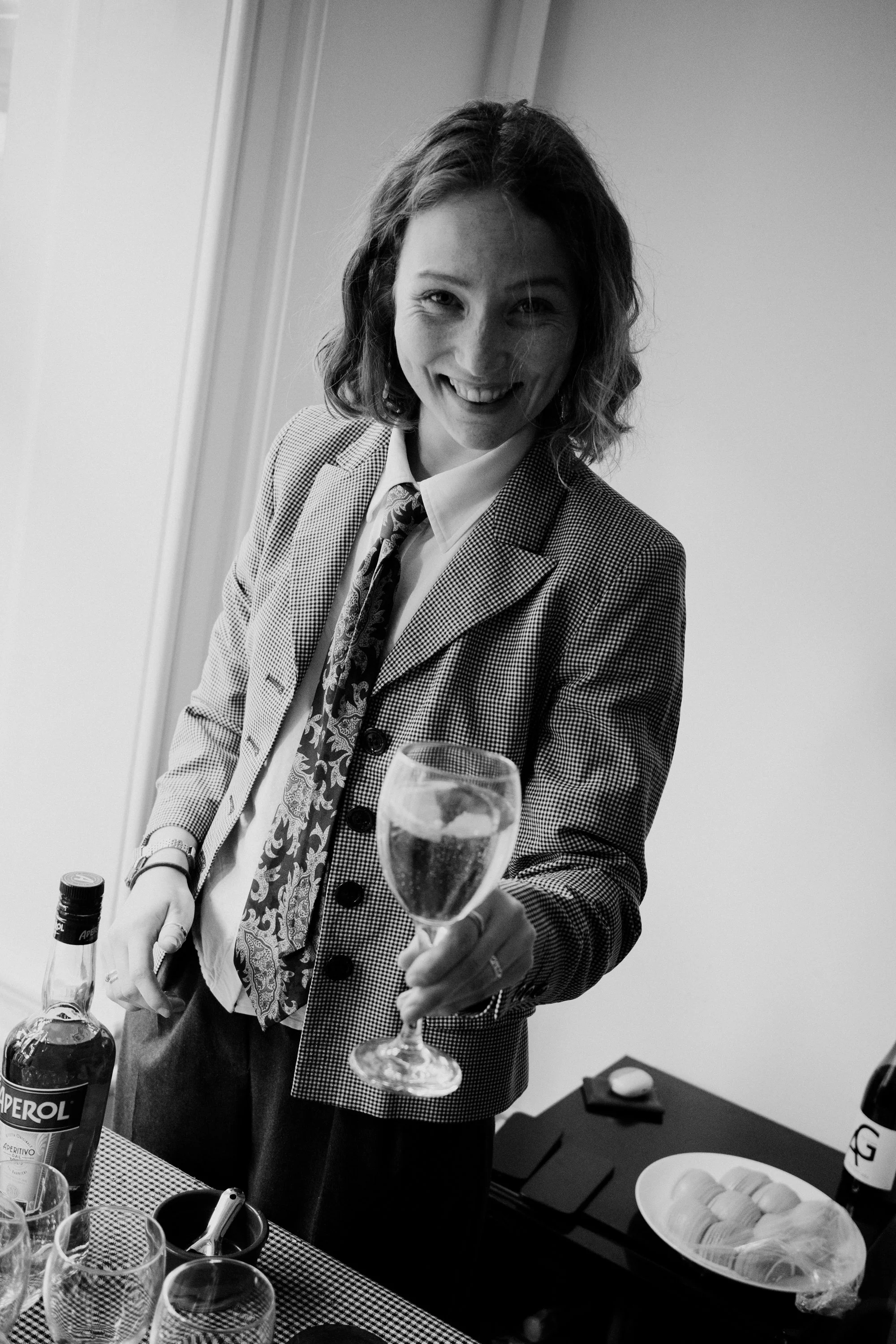
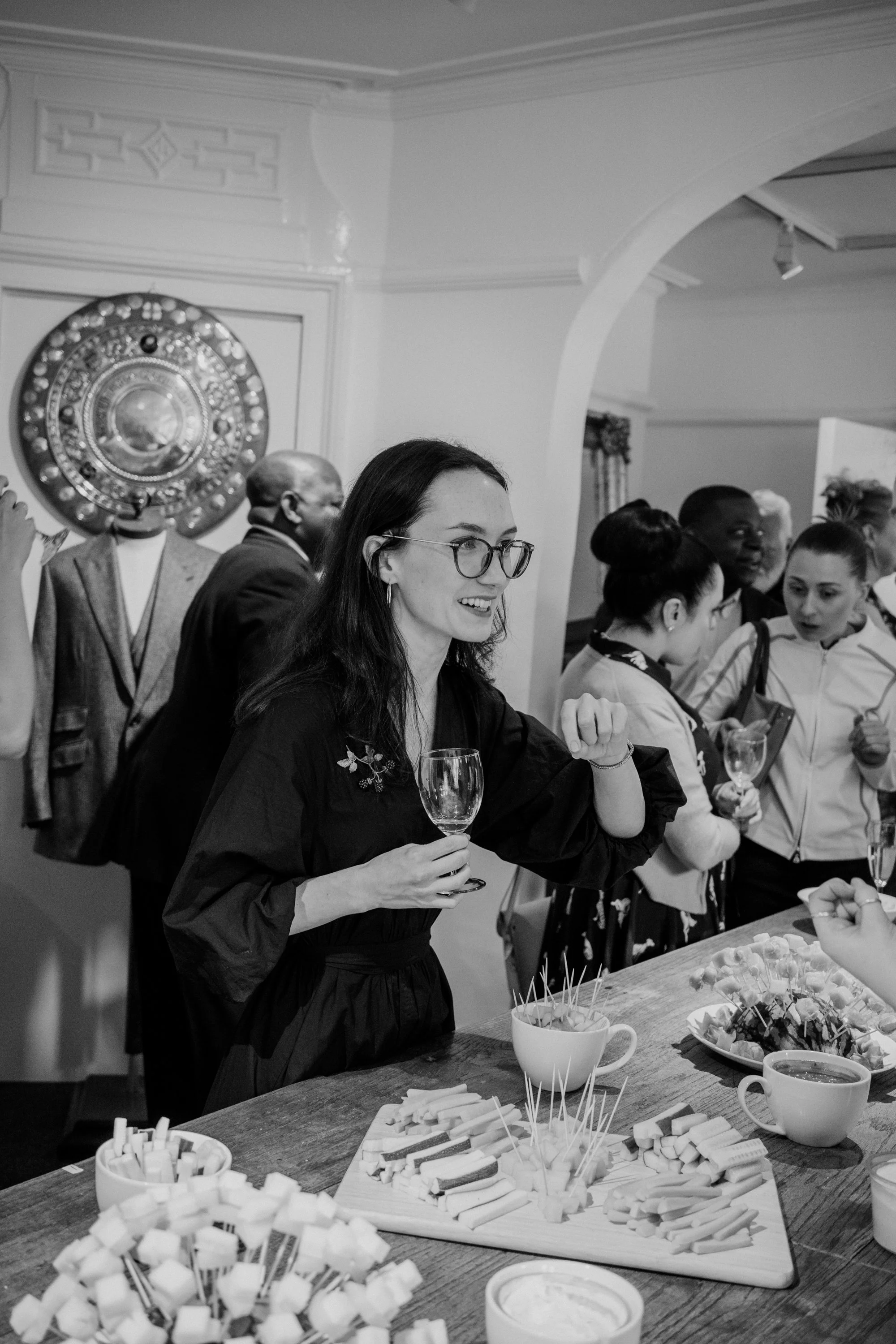
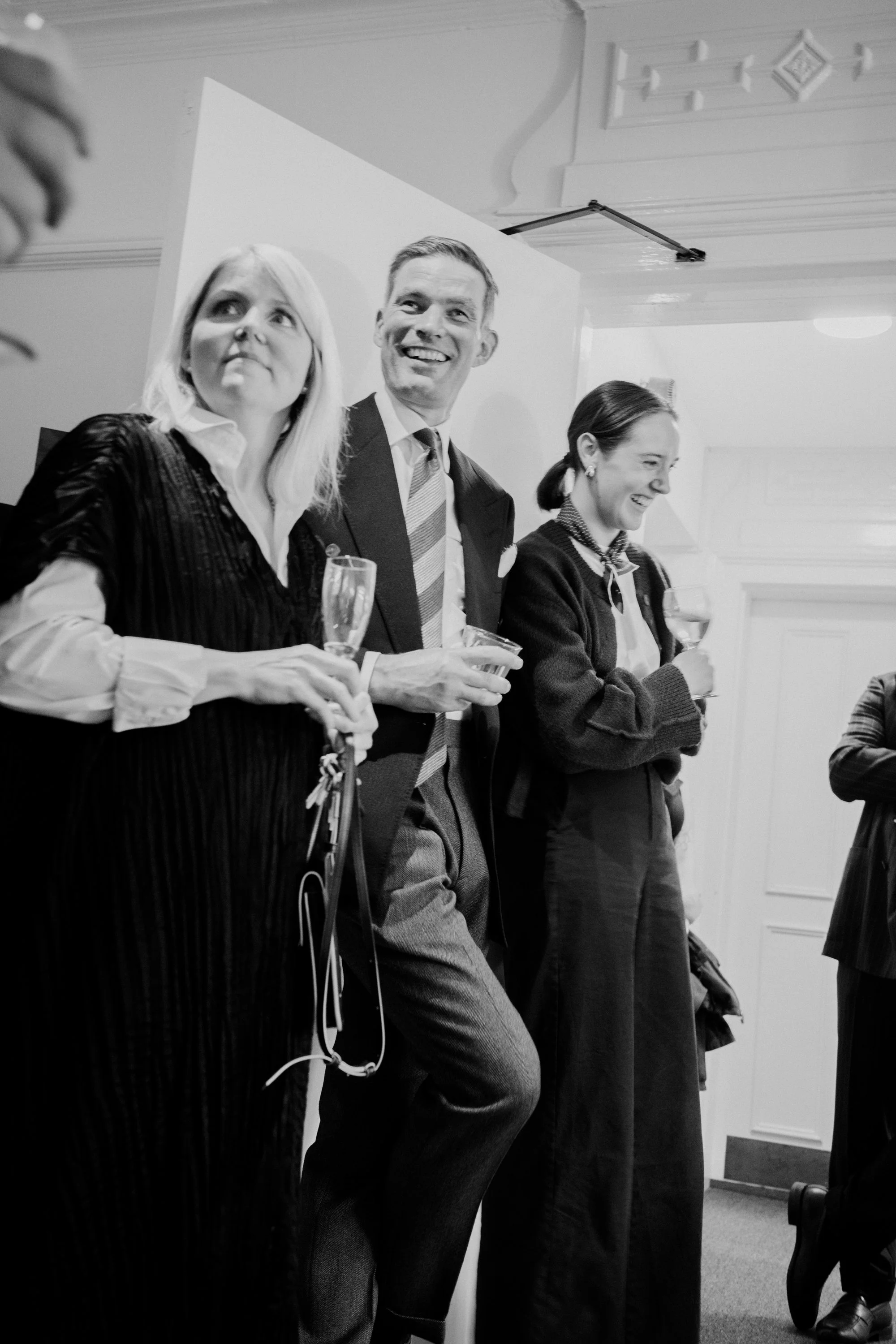
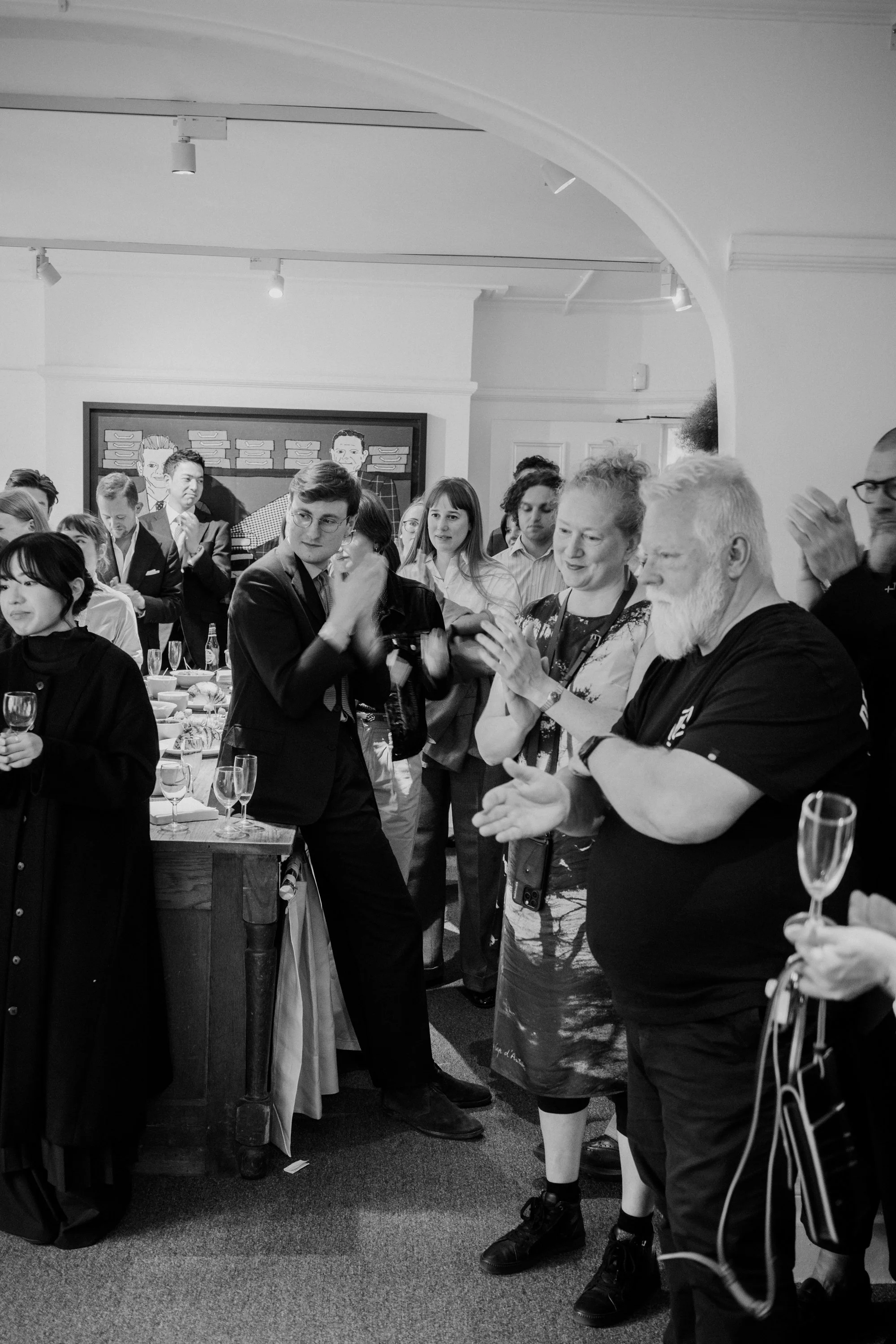
at our first 1896 event at the dugdale showroom on clifford street, chairman rob charnock was joined by up and coming designer ennis finnerty mackay in front of an audience of peers and customers, to discuss tailoring, design, latex and the boundlessness of british cloth.
transcribed from a live conversation and podcast recording, at the dugdale bros. & co. london showroom.
Rob Charnock (RC): Ennis, we're here to talk about the boundlessness of British cloth, and to celebrate you and your success. For me, it's a double celebration, because on Monday we were 130 years old. We're at a turning point as a company. There's no two ways about it. We've done what we've done for 130 years, and we've never compromised on that. We make cloth a certain way, and we will never change that. It's characterfull, it's memorable, and that's kind of a message that we're trying to get across to as many people as possible. So when a young lad like you comes along, it's really heartwarming that you had a consideration for our cloth, and to see what you did with it.
So let's get into it, how did it all start for you with clothes, fashion, tailoring etc?
Ennis Finnerty Mackay (EM): I come from a very, very creative family. I'm not very academically blessed. My dad is an architect and my mum was a fashion designer, and back in the day, my stepmum was in interiors, my aunts and uncle work in the arts. I was drawing before I was reading and writing, so I always knew I was going to do something creative. I was never fully into vogue or into fashion or into shopping, didn't really give two shits about it - it was only when I went to art school that I realised that fashion for me was the perfect mix of craft of skill, and a way you co tell a story. It was a really happy medium - you could either play into the technical side or you could play into something with a little bit more whimsy, and I kind of just followed what I was enjoying at the time, and that's what's led me to I am now.
RC: Fantastic. What was the journey through college, then?
EM: I went to Kingston Foundation, which was an amazing experience, and that led me straight onto the BA course. After that I interned at a few companies. But I felt like I hadn't been able to scratch the creative itch, and I my skill level wasn't quite where I wanted to be, so I really had my mind set on doing a master's at Central Saint Martins. It's an indulgent course, and I really wanted to take the time to just kind of be indulgent while I coul, before getting a job and having to pay a mortgage and so on...
RC: I know. Painful, that is.
EM: Yes. So I then went on to do my masters, which I graduated from two months ago, and which you guys have been very, very kind to support me through.

RC: Why Central St. Martin's?
EM: Multiple reasons. When it comes to fashion, there's a few heavy hitters, there's one in Paris, there's one in Antwerp, and there's one in London. I knew that I wanted to do something on home soil, where I felt comfortable. St. Martin's is known for being quite creative and quite outlandish. Also, my late mother studied at Central Saint Martins, so it was a connection to her. Even though the school has changed in location, it was kind of a way to go down the same hallowed halls (mine being a little bit more posh than the old building!).
RC : Yes, Central St Martin's is actually on the site of a nightclub that I used to frequent... If anybody remembers Bagleys?
Anyway, obviously we've got a lot of people in tailoring here tonight and I'm sure they'll be interested to know what drew you to tailoring?
EM: I like to be nerdy and technical, and even growing up, I was always very finicky about the work I was creating, and very detail-orientated. But it was really over Covid... there was nothing for me to do, and we had a jacket project at school, which I think everyone goes through every year, but I just took a few books out of the library and really tried to teach myself to make one jacket. And then make another jacket. and so on. I knew it was something I really wanted to try and push how far I could go.
RC: Absolutely! Let's get down to the actual collection, then. I know this is something that we've spoken about privately, but it explores the theme of addiction. I know a lot about addiction, because it's torn through my family, and I know you've had similar experiences, and it is - it's a family illness.
EM: Yeah.
RC: It affects everybody. So to actually choose that as a subject matter is very brave. So, just tell us a little bit about that, and how that affected you, and how you brought the collection together.
EM: Yeah... So, my mother passed away when I was 18 due to alcohol consumption throughout her life. I've explored this as a theme in the past, but it never quite had the effect I wanted it to, or it was more autobiographical than being useful to anyone else. But with my master's, I was really able to shift it into something a bit more universal. I think instead of looking at my mother's experience or my experience of her, I became obsessed with the idea of inheritance. Additction is something we all experience at some point, whether that be to an illegal substance or legal substance, or just being a workaholic. As humans, our brains are hardwired to find something we like and overuse, overstimulate ourselves with that. It's a biological and hereditary predisposition and I was really interested in the idea that my mother's traits live within me and that I'm more likely to develop an addiction in my life. Also, as a gay man, I'm 10 times more likely. And how do I combat that? How does addiction actually happen? How can you break the cycle? So that's where the research came from. The clothes came much more from looking at heritage. I wanted to recognise that, yes, we have negative parts and positive parts we inherit from our parents, but we also have the physical parts. A lot of my wardrobe is made up from my dad's and also from grandmother's clothing that I've inherited, and I've always really cherished having those items that I wear every day. And they're good quality items, which were built to stand the test of time and to be handed down. So the collection developed from me basically just becoming kid again, playing dress up in my parents' clothes - much to my dad's dismay!
RC: Dad's looking the other way…
EM: I ransacked his wardrobe, took everything out. And you can see in the collection, some of the silhouettes are quite avant-garde, but really they're all based on the clothes I inherited from my mum's side. We're quite a petite family, especially my grandmother, so I was corseting myself to get into my grandparents' clothing from the 60s and 70s, and wearing these alongside my dad's clothes bigger from the 80s. There was a really lovely conflict of volume and constriction - of the traditional sillhouettes of my grandmother's clothes and the more fun 80s sillhouette of my dad's wardrobe. So that really inspired the silhouettes and the drapes and the kind of iconography within the collection. I also wanted to incorporate elements of my British, Irish, and Scottish heritage. So yes, it's a collection about addiction, but it's also about inheritance, heritage, and lineage.
RC: Amazing. And thank you for your honesty, because I know when we talk about things like that, they're very moving, and to actually be so honest in front of people is remarkable. And in terms of the cloth, you wanted something that would also stand the test of time, and you specifically wanted woollen fabrics?
EM: Yeah. I kind of naturally knew what I was drawn to. I've always loved a heavier cloth, someth that has a bit more body. I was interested in trying to expand my experience with tailoring and shrinking, stretching cloth, etc. So I wanted to find something that would react to those processes well. I was very, very lucky to be introduced to you by one of my tutors, and you guys invited me here and gave me complete free reign, just to look through your stock, and I was a kid in a candy shop! I didn't kow anywhere near as much about cloth as I would like to at that point, and it was just touch and feel, and instinctually responding to what I felt. I did have some things in mind, like one of the shirts in the colleion is a riff on one of my dad's shirts from the 80s and I wear that shirt nearly every other day. So I was looking for fabrics that were a direct response to garments I already had, as well as ones that had more of an emotional resonance.
RC: That's the great thing about our cloth - you can do almost anything with it, you know? It's very forgiving, it's strong, it's robust, it's characterful, it's memorable. And when tailors and designers use it, treat it with respect, it sort of gives me purpose. So, how was the cloth? Don't say it was shit.
EM: Haha! I mean, it was okay... but no, the cloth was great, honestly. Also, I was learning on the job, so it was nice to see how certain cloths were behaving with other certain garments, and the way things were stretching and draping etc. But like I said earlier, it was actually the first time I had the opportunity to work with a cloth that was 100% wool and which had been specifically designed for what I was using it for, rather than something I had picked up from a backdoor shop in Hackney! I mean, half of the joy of working on this was just smelling the fabrics... you could still smell the sheep as I steamed everything. It brings you emotionally closer to what you're working with. It also meant a lot for me that the cloth was made here in the UK. As students we hear a lot about sustainability, accountability, and knowing where our garments are made or who makes them, and so it was a point of pride that I could point at pieces of my collection and go, I can give you the postcode of where that's made. That meant a lot to me.
RC: Yeah, it's a good point, is that. And to say how much success you've had, you're a very humble fella, and it's the same with Dugdale - our cloth speaks very quietly, it speaks for itself, we don't have to shout about it. But it exists thanks to the very creative, skillful, humble people that take the wool, spin it, weave it, finish it. We're talking about years of skill passed down from one generation to the next. I'm nearly welling up! That's the emotion, that's the passion that goes with it...
… anyway, moving on.
You combined wool with latex…
[Laughter]
And what I like about it - before you jump in - is you were using condoms. Not used condoms, of course... But what's that all about?
[More laughter]
EM: From a technical standpoint I don't think you can get any more opposite in terms of materials than wool and latex, so I was really trying to push myself technically to combine those two. As a queer man, I was also interested in how condoms are such a big part of queer spaces. At any pride event they are just chucked at you, because it's a kind of tokenistic sign of looking after the community or looking after one another. But the reality is we now have medication which can prevent HIV and also significantly reduce the chance of you getting an STD in general. So even though many people now don't use condoms, they're still handed out, and it creates a lot of waste in queer sex positive spaces. I wanted to try and link that in that way. I was able to get in touch with a charity in London to get expired condoms which I then upcycled. I had all these condoms just littered around our house for a while (much to my father’s dismay!). I would put them through a washing cycle and hang them on drying racks and use talcum powder to help dry them out.
RC: Is tailoring always going to be a big part of what you do?
EM: Yeah, definitely. During my masters a lot of people spoke about my work or spoke about me as someone who focused on tailoring and that was kind of like a pigeon hole. I'm very happy to be pigeon holed in that area but I always understood it as a technique you use in order to make cloth do what you want it to do. I was doing it to skirts, I was doing it to anything, as well as jackets. So really, I just see it all as 'making', and I'll always make the way I make, and I'll always want to try and improve and learn as much as I can. I think tailoring is just the most geeky way you can make. The first jacket I made using different techniques to the last jacket I made, because each time I try something, I learn. And I there's still so much I don't know.
RC: Did you ever have moments, when you thought I don't know what I'm doing here or where I'm taking this?
EM: 100%. Pretty much every day on the MA I'd walk over to my friend Tito’s table and be like, don't know what the fuck is going on.
RC: But you've got to stick at it, haven't you? You've got to stay in it and keep working at it.
EM: Absolutely. The course at CSM is known for being quite competitive, which has its positives and its negatives. But for me, it was a really lovely experience to be in a relatively small studio surrounded by people who were also as passionate as you about making something completely individual.
RC: Brilliant. Listen, we could go on forever, but this is the bit that I'm curious about - you've graduated, and you've floated off to Paris. So, what you're doing there?
EM: I'm currently at Schiaparelli working towards the next couture show. I'm very lucky. It's been a lovely and crazy couple of months. I've very much abandoned my room in London and left it in a bit of a mess, so I do need to come back and clean up at some point...
But I also just want to thank you guys very much for your ongoing support. It's allowed me to play and do what I wanted to do. I really appreciate it. Working with you guys [at Dugdale Bros & Co.] has been such a lovely opportunity, because in the past, I haven't actually had access to such high-quality materials. So on my masters, with your help, I've been able to actually start to do things properly, and the results show.
RC: Well, I admire greatly what you've done and I'm certain you'll go on to great success. We're an old firm, and now is the time that we need to make a difference, and having young people around to learn from and inspire what we do is so important.
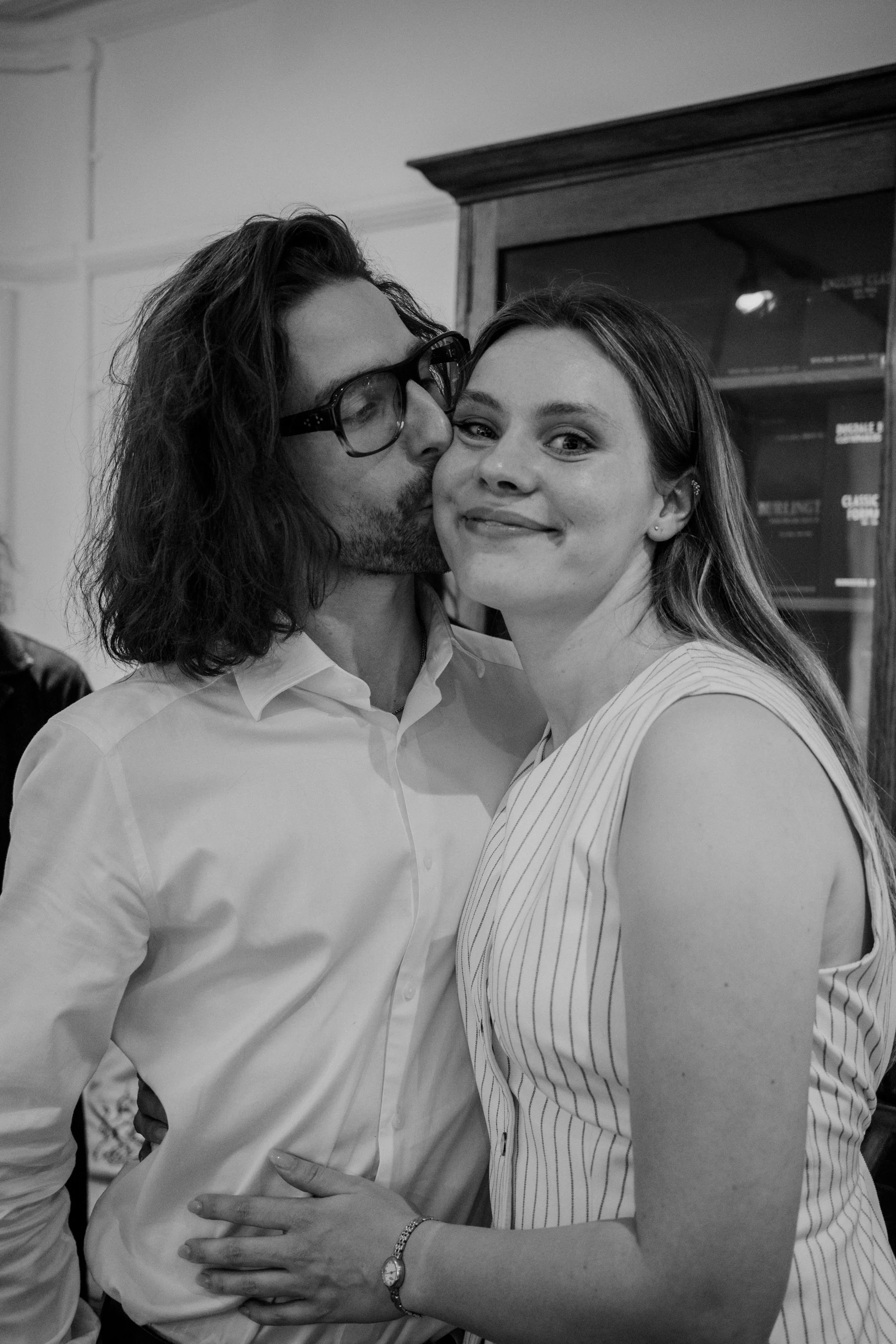
Come on, give us a hug. Fantastic. Right - get t'bar and shut up.