in italy: a love song to the old ways
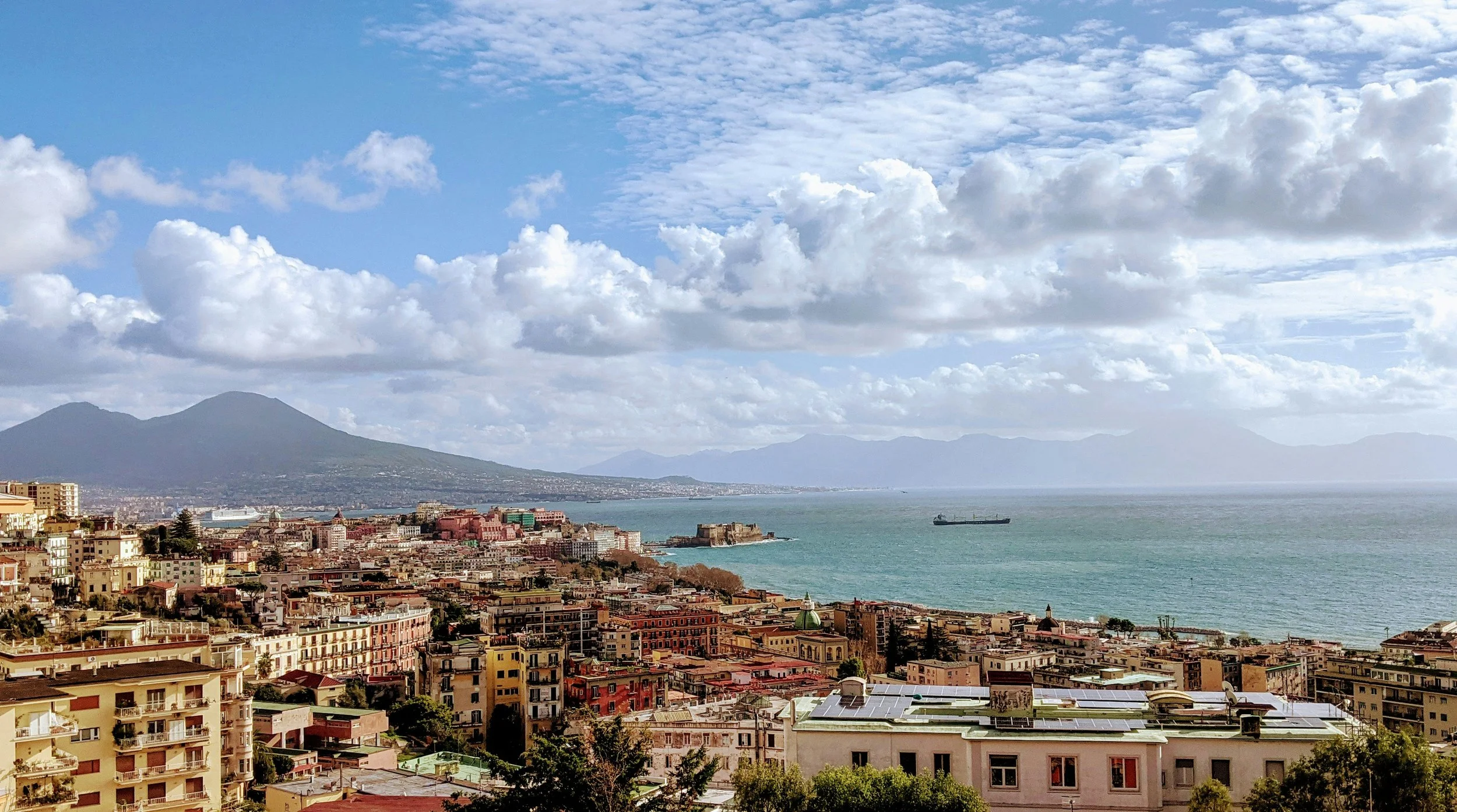
The Bay of Naples
our man in the field regales us with a tale of his most recent trip to italy, where he visited a host of legendary neapolitan tailors to understand more about their fondness for english cloth and also to eat pasta and drink wine.
by arran cross
Rumbling over the familiar hillsides and dropping low enough that it felt like we might clip them, we watched the bay of Naples stretch out as far as the volcanic headland that spills out to Capri and Ischia. Stepping off the plane I was delighted not to be greeted by the Cobus - that familiar, infernal, long wheel base, slow-moving overcrowded and airless motorised monster that usually awaits weary travellers at the foot of the air stairs when you touch down at stand G68. Even the passport control experience was suspiciously smooth, which given whatever is currently going on with the EU Entry/Exit system at the time was remarkable. Our luggage was also first off the carousel. Life was good.
Less could be said for the driving in Naples. The airport-to-hotel taxi had the feel of a game. One which was the brain child of a married couple - the wife, a lifelong devotee of the ballet and the husband, a man wholly enamoured by stock car racing. There were exhilarating, deft lane changes and unbelievable accelerations as dusty, dented Lancias, Alfas and the occasional Cinquecento screamed through the long tunnels on the outskirts of the city. I have driven in Italy. I am conversant with the short-slip-road, full-lock lane changing, bank-robbing style of driving. And I actually enjoy it. But this really was a wild ride.
The Maradona stadium is a building that somehow looks inside out and in the shadow of it, we found our hotel: A well-appointed ex judicial office building built around a central courtyard with a pool that couldn’t have been more than 8 inches deep. The building had external security shutters on the windows that opened and closed according to their own free will and the room was 29°C all day every day. Real Italy. Perfect.
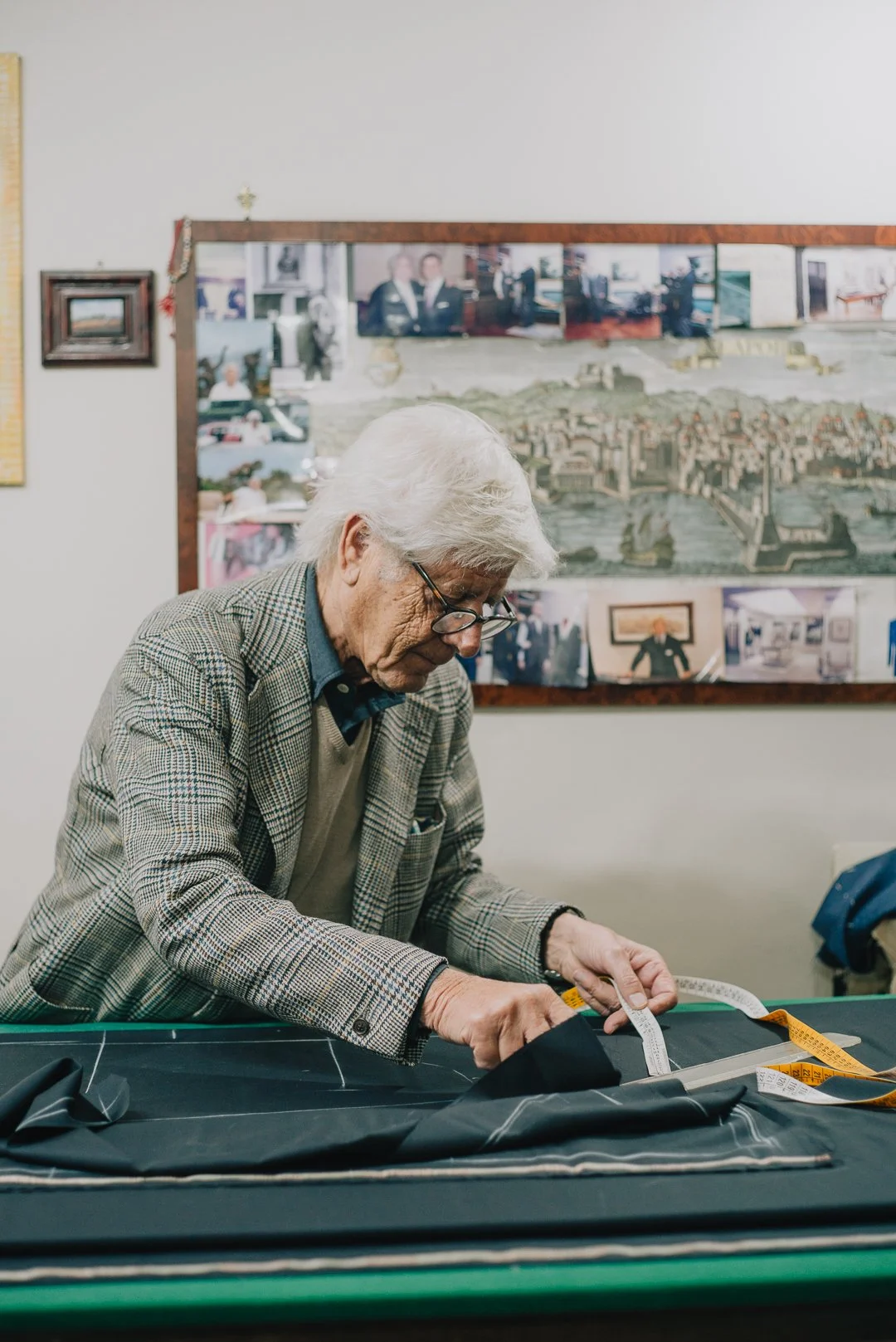
Gennaro Solito of Sartoria Solito at the cutting table.
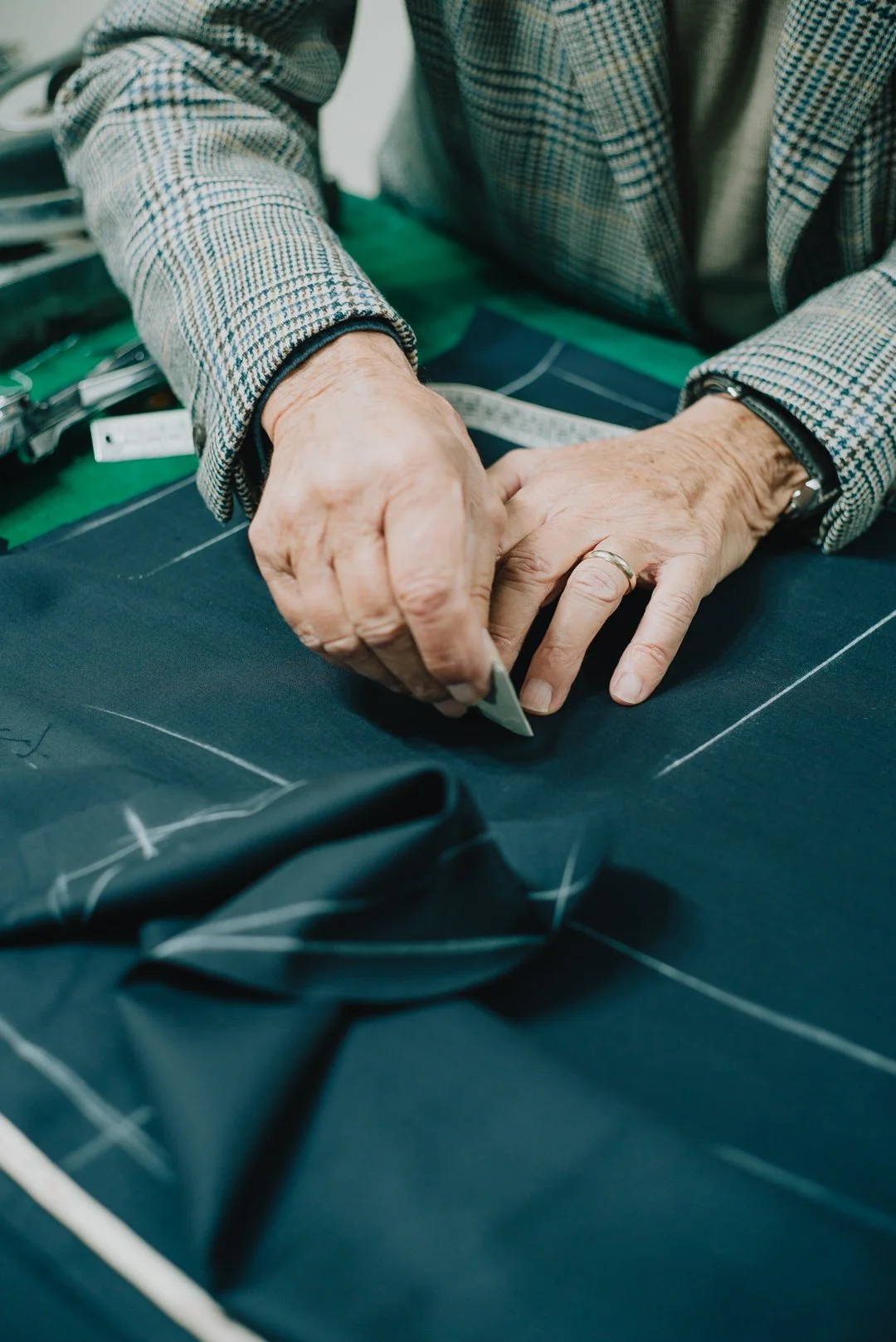
Marking out the cloth.
The plan, according to our local agent Giovanni, was to meet with as many tailors as possible in a three day period. He thought we could do 14 or 15 a day. I didn’t believe this was possible until I climbed into the back seat of his Mercedes and pedal met metal before I’d even closed thedoor. Giovanni isn’t even from Naples, but when in Rome, I guess. The silver estate streaked through the city and we almost died several times (I wish this was hyperbole). Obviously Giovanni wasn’t to blame for any of these near death experiences. He is a professional. His last car, the exact same model, had died with 400,000 on the clock. This one was new and thankfully had new OEM pads and discs. We would go on to rely heavily on the wonder of German automotive engineering for the rest of the week.
It was 8am and I had already had four espressos when I was offered my fifth in the atelier of Ciro Zizolfi. Like a good Englishman I expected a declination to be rude so by 8.15am I was flying. If Italy had a space program I would have been a leading part of it. It was the same at Solito,Dalcuore, Pirozzi, and Ciardi.
In the back of one tailors shop, under the strip lights, where old and young elbows rub together around the table, one tailor opined that Italian cloth is ‘empty’. He explained that he preferred English cloth for its fullness. It was this fullness made English cloth better to work with and to wear. We heard this comparison a lot - empty Italian vs English fullness. It was good to hear. By 3pm I was feeling my own specific kind of English fullness after quite a hearty seafood lunch with Caracciolo’s Nicola Giordano.
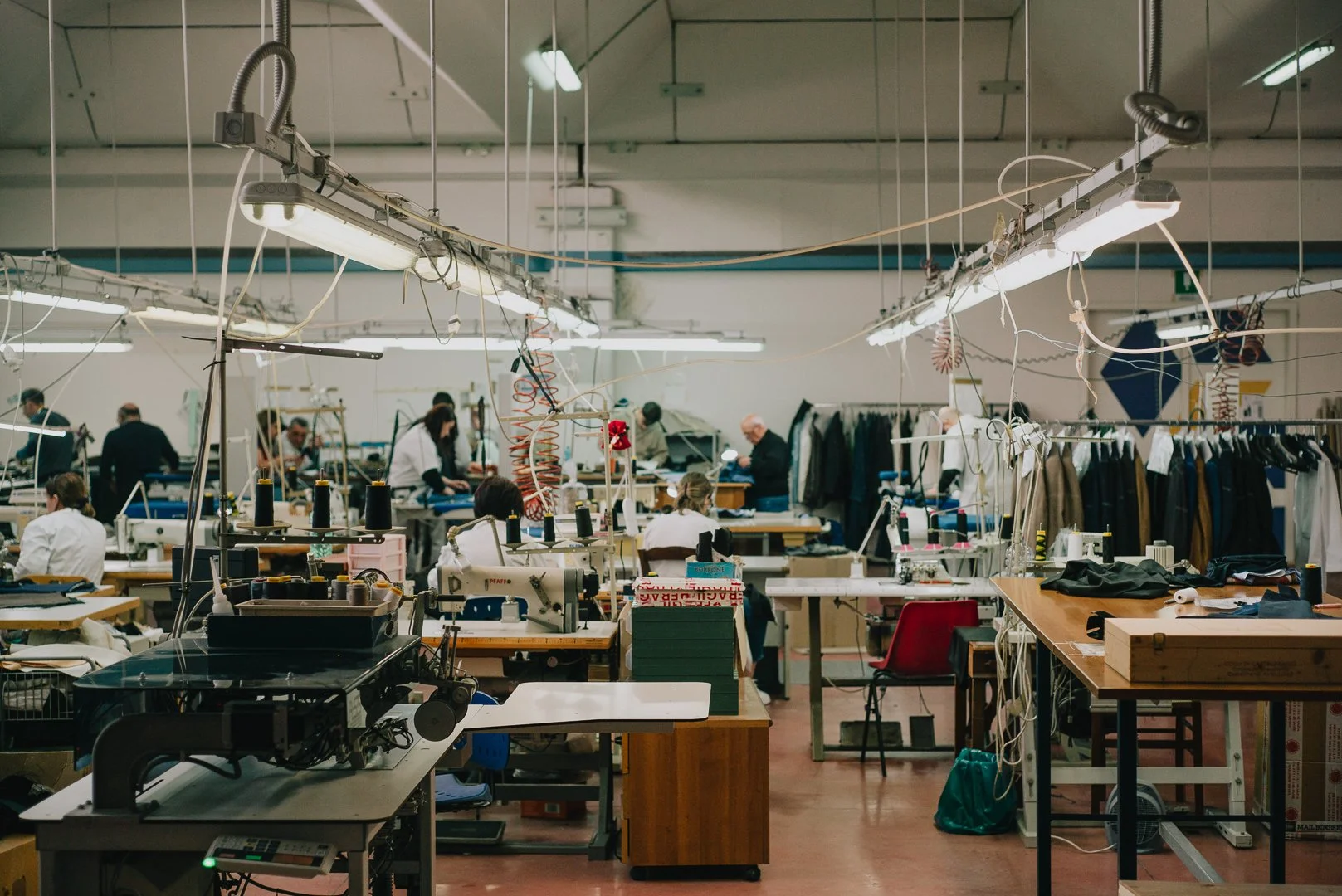
Inside the Sartoria Caracciolo workshop in Naples.
My Italian is passable. Sometimes it’s more an impression of Italian rather than conversational Italian but I get by. What I mean is that I can do the accent. When I make small talk or order food some Italians mistake me for a compatriot and then machine gun me with bursts of staccato Italiano thatleave me blank-faced. In Naples the language is different, compressed and softened with its own set of grammar,vocabulary and phonology. It’s almost a different language. Luckily Barolo is the same wherever you are in Italy.
Owing to my experience and profession I know how suits go together and I have never seen a suit made like they make them in Naples. I have seen many suits made in Savile Row. I even own a few. This, dear reader, is not a flex - but confirmation of my credentials. The Neapolitan way it’s softness from the start. Gentle hands on half moon wooden blocks with decades of pressure push out the lapels, ancient irons press shapes and silvered shears cut into cloth. Soft soulful stitches ride the seams and there is a lightness to the process that manifests in the manufacture. There is an attitude that pervades everything - it’s an easy and respectful pride that runs into every step of the make, resulting in beautiful, characterful tailoring.
In Naples I met fathers with decades in the game who had stepped aside and sons transforming their old businesses into something new but with the same values of craft and care at the core. The fathers still worked away, quietly, at their cutting tables, while young sons punched calculators and keyboards and booked plane tickets to New York and Hotel Rooms in Japan for trunk shows. One tailor I met has 400 clients in London. Another recently sold 70 suits in one trunk show. This is the old way, revitalised.
One word that springs to mind when I think of Sartoria Napoli is famiglia - every shop and studio was a family. Fathers and sons, mothers and daughters, uncles, cousins and aunties all with a common goal - a two hour lunch and 30 cigarettes a day.
Un sentito ringraziamento ai nostri amici italiani per la loro ospitalità.
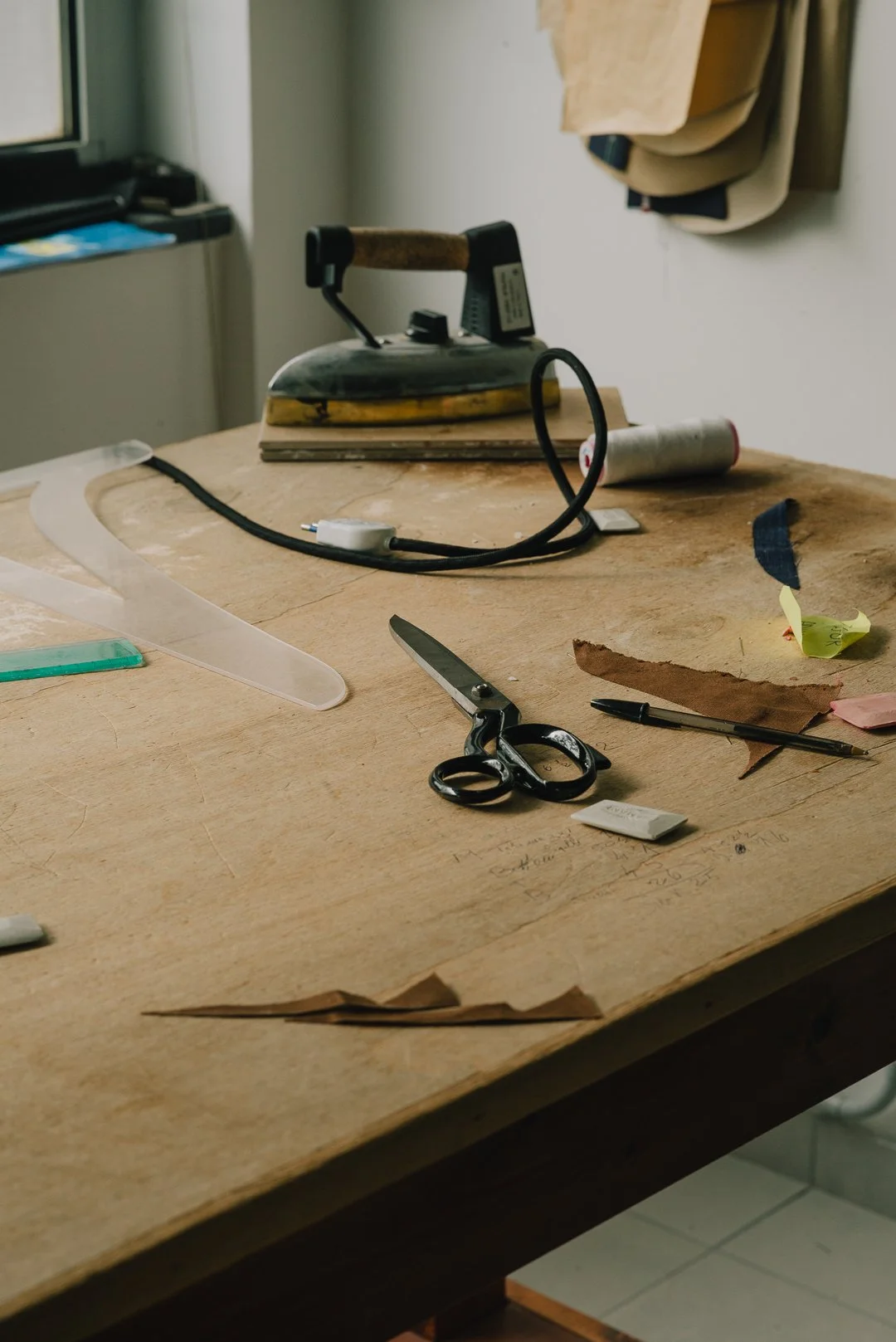
Tools of the trade at Sartoria Pirozzi.
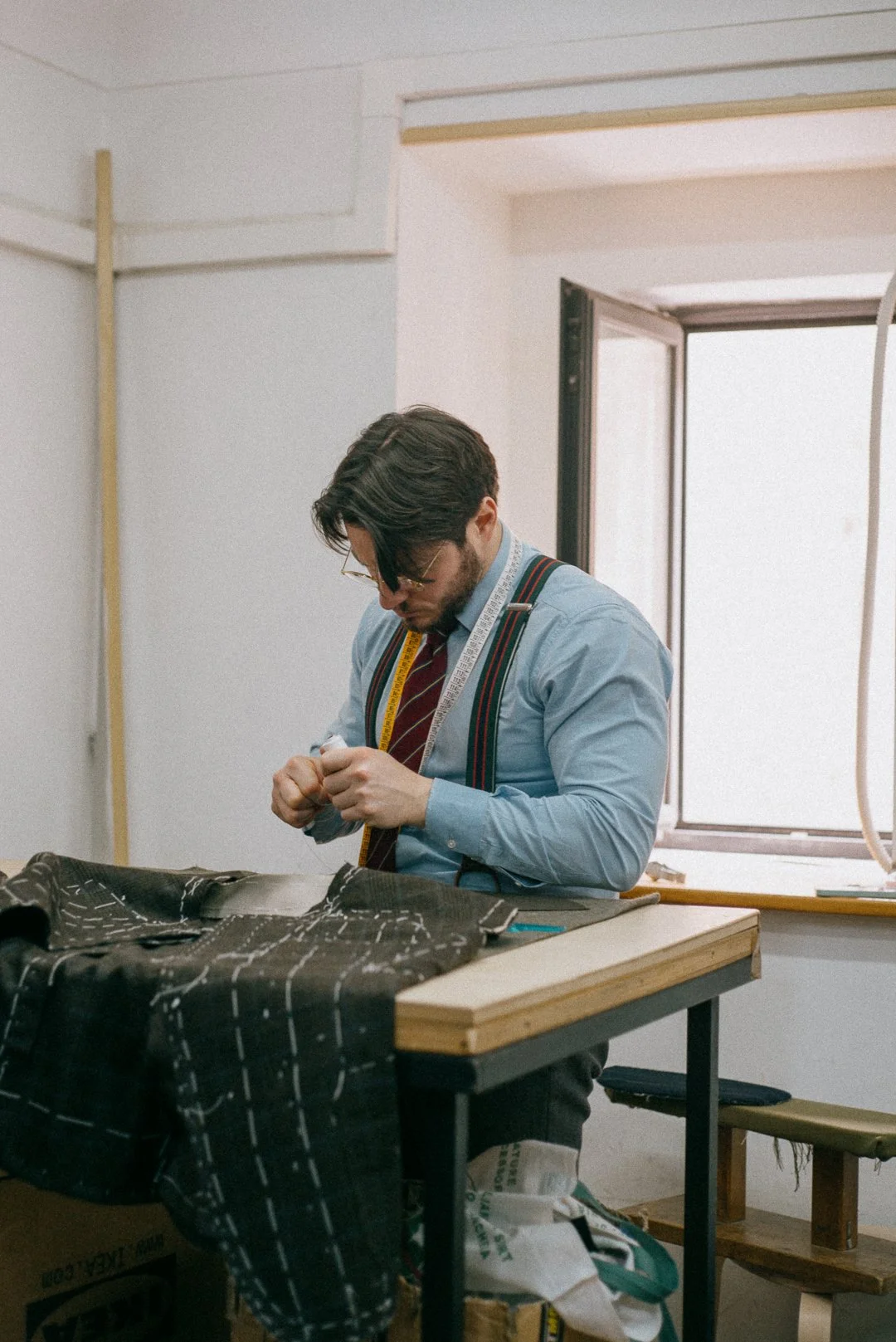
Coatmaker at work at Sartoria Ciro Zizolfi.
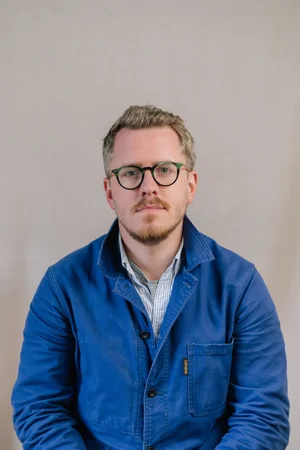
Arran Cross is a writer, photographer, brand director and sometimes foreign correspondent at Dugdale Bros. & Co. His work explores the people, places and traditions that shape the world of cloth, tailoring and craftsmanship. @arran_cross